Coastal Virginia Pest Trends
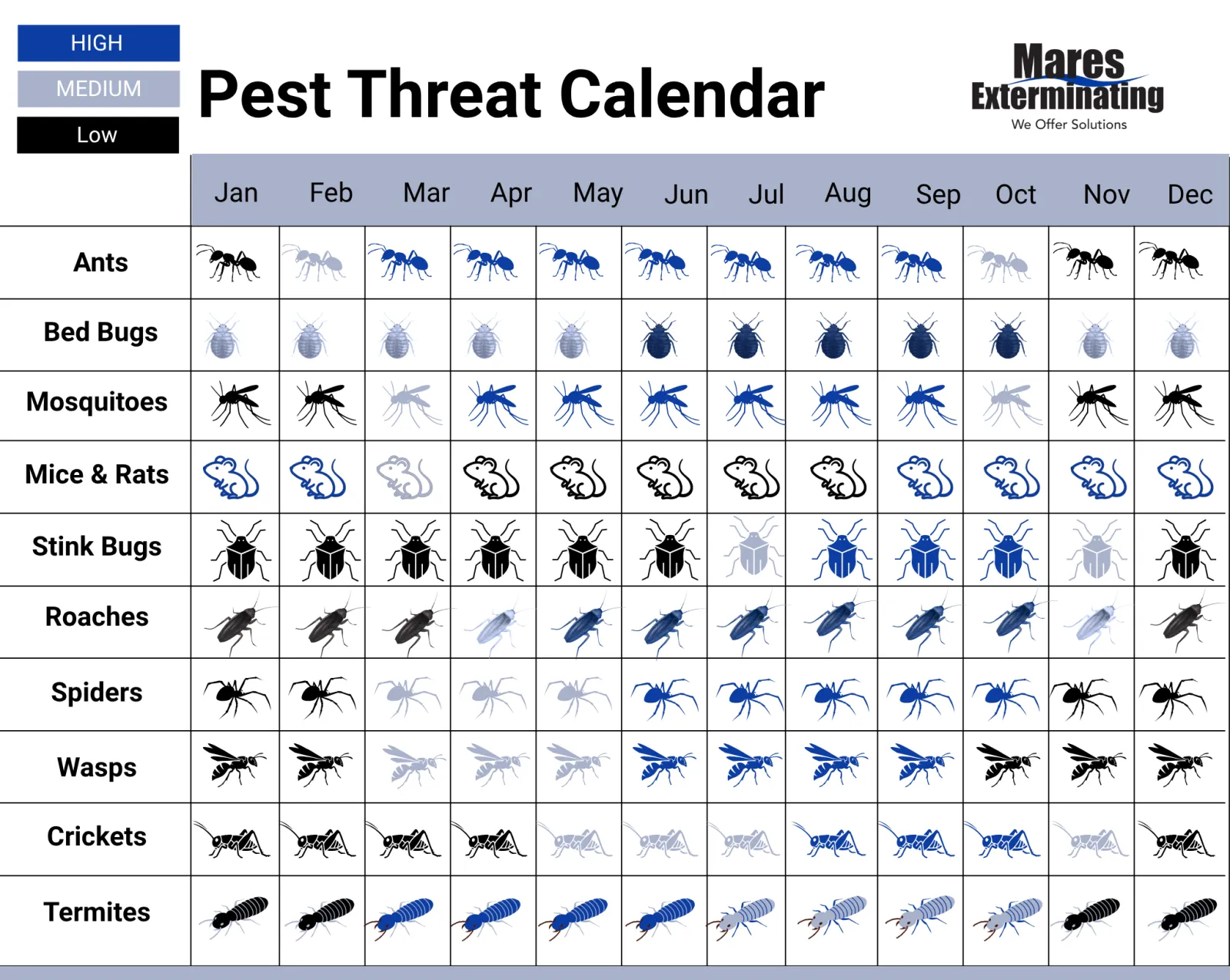
Year-Round Pest Activity Calendar
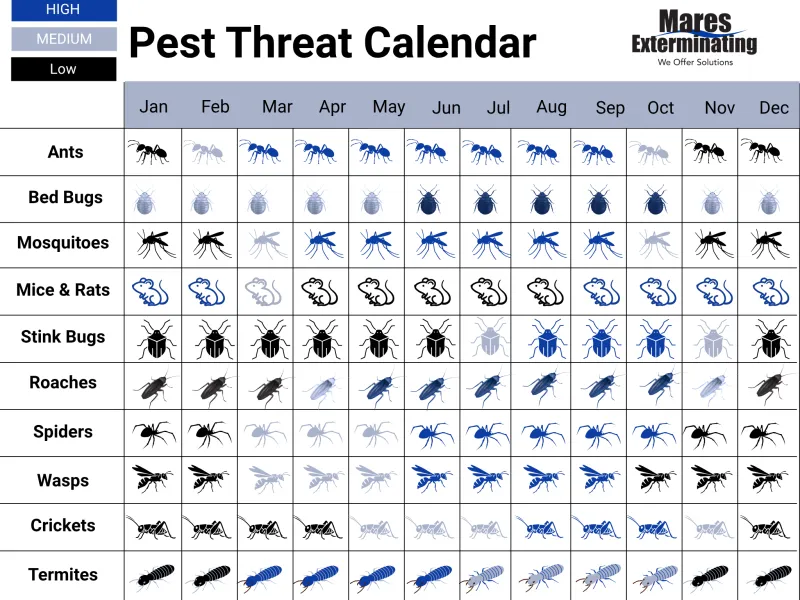
Living in Poquoson means loving the water, but our unique coastal geography—surrounded by inlets, marshlands, and the Chesapeake Bay—comes with a distinct set of pest challenges. The high water table and intense seasonal humidity mean that for Hampton Roads homeowners, pest pressure isn't just a summer issue. It's a 365-day battle. Pests don't pack up when the seasons change; they simply shift their focus. Staying ahead of them requires knowing exactly what's active in our coastal ecosystem month by month.
Spring: The Moisture Surge & Subterranean Wake-Up
As the spring thaw arrives and seasonal rains saturate the low-lying Poquoson soil, pests underground are driven upward in search of food and dry nesting environments.
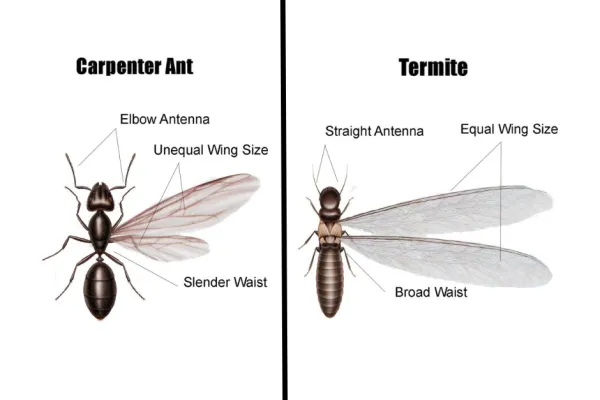
- Subterranean Termites: Spring is peak termite swarming season across Coastal Virginia. Winged swarmers emerge in massive numbers looking to establish new colonies, making damp crawlspaces and moist foundation wood primary targets.
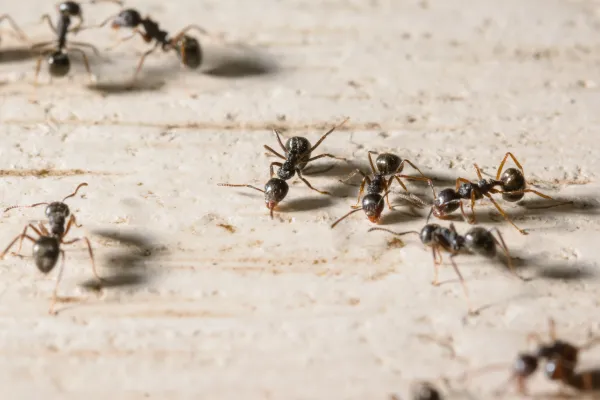
- Large Foraging Ants: Carpenter ants and moisture-loving odorous house ants become highly active, trailing into kitchens and bathrooms looking for sweet resources to feed expanding spring colonies.
- Earwigs & Millipedes: Driven out of oversaturated mulch beds by heavy spring downpours, these moisture-seeking pests frequently invade ground floors and garages.
Summer: The Marshland Explosion
When the intense heat and heavy humidity of a Hampton Roads summer set in, local insect populations explode.
- Mosquitoes & Chiggers: With our extensive wetlands and standing water, mosquitoes reproduce at breakneck speed. Backyard spaces can quickly become unusable without targeted barrier treatments.
- Stinging Insects: Paper wasps, yellow jackets, and hornets build massive nests under porch eaves, boat docks, and decks, becoming increasingly territorial and aggressive by late summer.
- Fleas & Ticks: High humidity coupled with local wildlife traffic makes summer prime time for deer ticks and fleas to latch onto pets and family members in the yard.
Fall: The Shift to High Ground
When the evening air turns crisp and the leaves begin to drop, outdoor pests realize the maritime winter is on its way. Your warm, dry home becomes the ultimate target.
- Rodents (Mice and Rats): As fields clear and temperatures drop, field mice and roof rats seek out small structural gaps to sneak into attics, crawlspaces, and marsh-facing properties.
- Spiders: Fall marks peak mating season for local spider species. Wolf spiders and house spiders become highly visible as they leave their hidden corners in search of mates.
- Overwintering Insects: Brown marmorated stink bugs and boxelder bugs cluster on the sunny sides of homes, looking for small cracks in siding or window screens to slip inside for hibernation.
Winter: The Crawlspace and Attic Takeover
While outdoor activity drops significantly when frost hits the Peninsula, the pests that successfully breached your home's exterior defenses are now settled in for the winter.
- Mice & Rats: Safe from freezing winds, rodents will nest inside home insulation, chew on wiring, and forage through pantries.
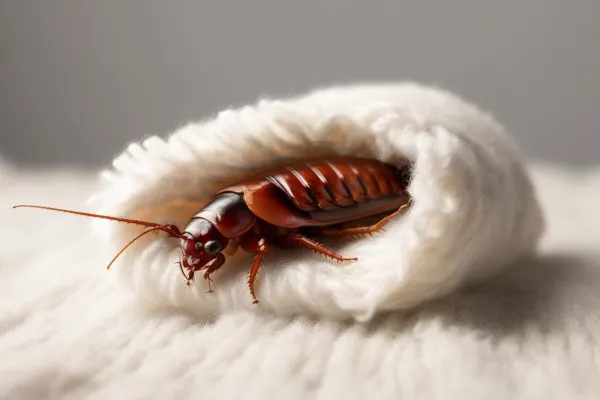
- Cockroaches: American and German cockroaches thrive in the dark, warm, and humid microclimates of your home, frequently congregating behind large appliances, under sinks, and around water heaters.
Preventative Protection in Every Season
The easiest way to deal with a pest problem is to prevent it from starting. If you've noticed early signs of seasonal invaders, or want to make sure your home's protective barrier is ready for the upcoming season, the local experts at Mares Exterminating are here to help.
Contact our office today to set up a seasonally targeted protection plan built for your neighborhood.